
Balsall Common Primary School Pursuing excellence for all
Computing/ICT
We aim to develop children’s understanding of computer science, digital literacy and online safety through purposeful and engaging learning experiences.
Computing is taught by a specialist teacher in fortnightly sessions from Reception to Year 6.
Our Curriculum
At our school, we provide a broad and balanced computing curriculum that equips children with the skills, knowledge and confidence to thrive in a digital world. We follow a blended approach, primarily based on the NCCE (National Centre for Computing Education) scheme of work, enhanced with resources from Purple Mash and selected activities from the Barefoot Computing programme.
NCCE Scheme of Work
The NCCE curriculum provides a structured and progressive approach to computing. It ensures that all pupils develop key knowledge and skills in three main strands:
- Computer Science – understanding how computers work and developing coding skills.
- Information Technology – creating digital content such as presentations, documents and media.
- Digital Literacy – learning how to use technology safely, respectfully and responsibly.
Each unit builds on prior learning, allowing pupils to revisit key concepts and deepen their understanding as they progress through the school.
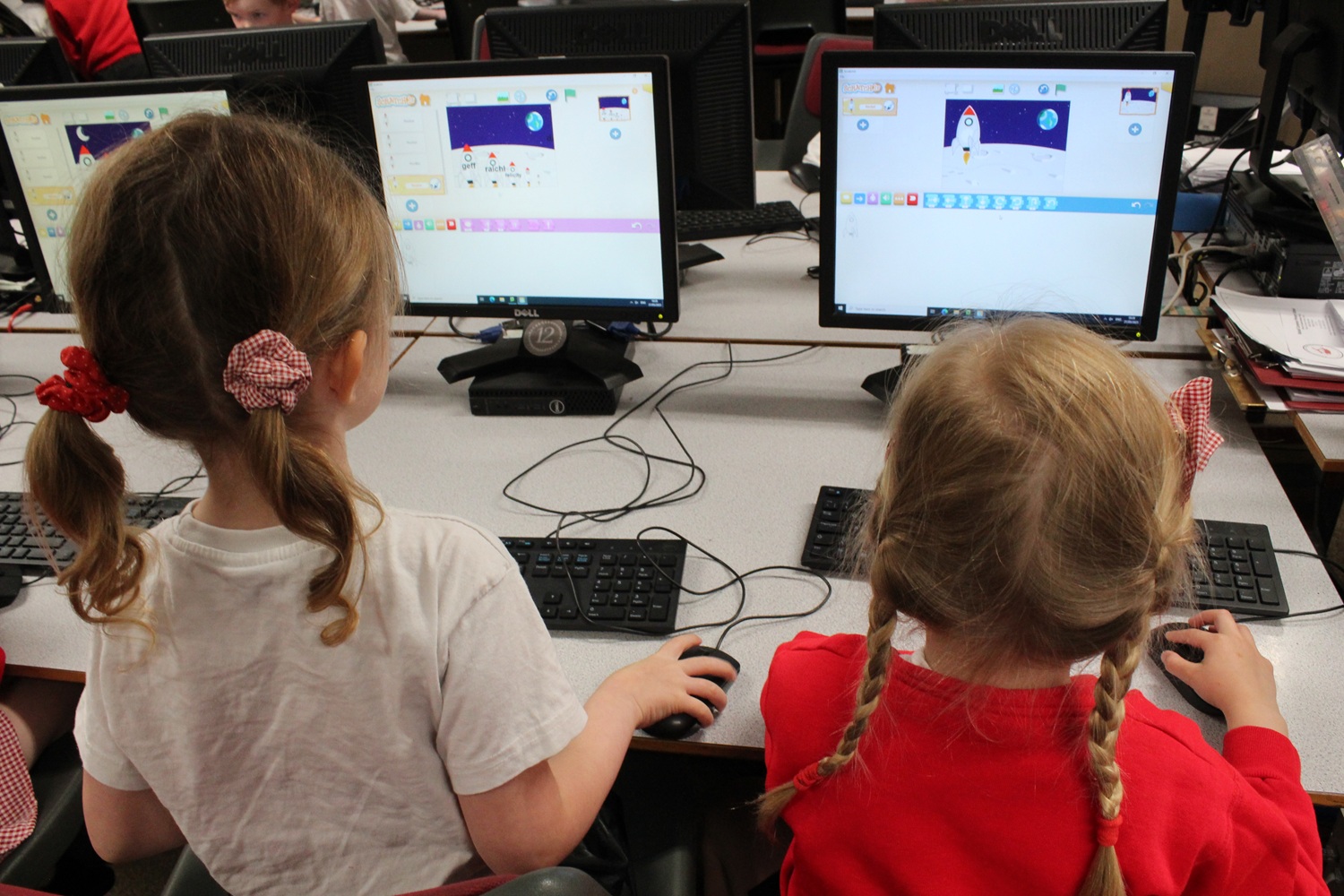
Purple Mash
Purple Mash is used to enhance learning with engaging, interactive tools. It supports pupils in applying their skills in creative and practical ways, including:
- Creating animations, games and quizzes
- Developing coding skills through visual programming
- Producing digital writing, artwork and presentations
It also enables pupils to save and revisit their work, supporting progression over time. Purple mash is used primarily to support reception children whilst they learn mouse skills.
Barefoot Computing
Barefoot Computing resources are used to supplement our curriculum with creative and cross-curricular activities. These lessons often link computing skills with topic work, helping children to make meaningful connections across subjects.
Activities include unplugged computing tasks, problem-solving challenges and collaborative learning, making computing accessible and engaging for all learners.
Links to Cornerstones Topics
Our computing curriculum is carefully linked to the Cornerstones curriculum used across the school. Where appropriate, computing lessons are integrated into topic work to provide meaningful contexts. For example, pupils may:
- Create presentations linked to history or geography topics
- Use data handling in science investigations
- Develop digital storytelling in English
- Apply coding skills to design topic-related games
This approach supports deeper learning and helps pupils understand how computing skills can be applied in real-life contexts.
Safeguarding in Computing
Safeguarding is a central aspect of our computing curriculum. We ensure that all pupils are taught how to use technology safely, responsibly and respectfully both in school and at home.
- Understanding how to keep personal information private and secure online
- Recognising trusted adults and how to report concerns
- Learning about online behaviour, including kindness and respect
- Identifying risks such as cyberbullying, scams and inappropriate content
- Developing critical thinking skills when using digital content and media
Online safety is embedded throughout our computing lessons and reinforced across the wider curriculum through PSHE and assemblies. We work in partnership with families to promote safe use of technology beyond the classroom.
Further Opportunities
At BCPS, children can further develop their computing skills and talents by becoming Digital Leaders, helping staff and pupils with computers, laptops and tablets across the school.
A Code Club is available for Year 5 and Year 6 pupils every Monday after school, providing additional opportunities to explore coding and computational thinking.
Safer Internet Day is celebrated annually at BCPS. Children explore a range of online safety topics, including privacy, cyberbullying, social media, scams, misinformation, digital wellbeing and the safe, responsible use of artificial intelligence (AI). Activities encourage pupils to become confident, respectful and responsible digital citizens.