Balsall Common Primary School Pursuing excellence for all
Phonics & Reading
Phonics and Early Reading at Balsall Common
Reading is a fundamental part of learning at Balsall Common. The teaching of Phonics is prioritised at the start of each child’s learning journey with us in the Early Years as we believe that the ability to read is critical for pupils to access learning across all areas of our curriculum as they progress through school.
At Balsall Common we use the ‘Little Wandle Letters and Sounds Revised’ Phonics programme to introduce children to their first steps in learning to read. The ‘Foundations of Phonics’ are introduced in Nursery and we then follow the Little Wandle Progression through Reception and Key Stage One.
If you would like to access the parents section of the Little Wandle website to find out more about the teaching programme or to watch some useful videos about sound pronunciation, please use the following link:
https://www.littlewandlelettersandsounds.org.uk/resources/for-parents/
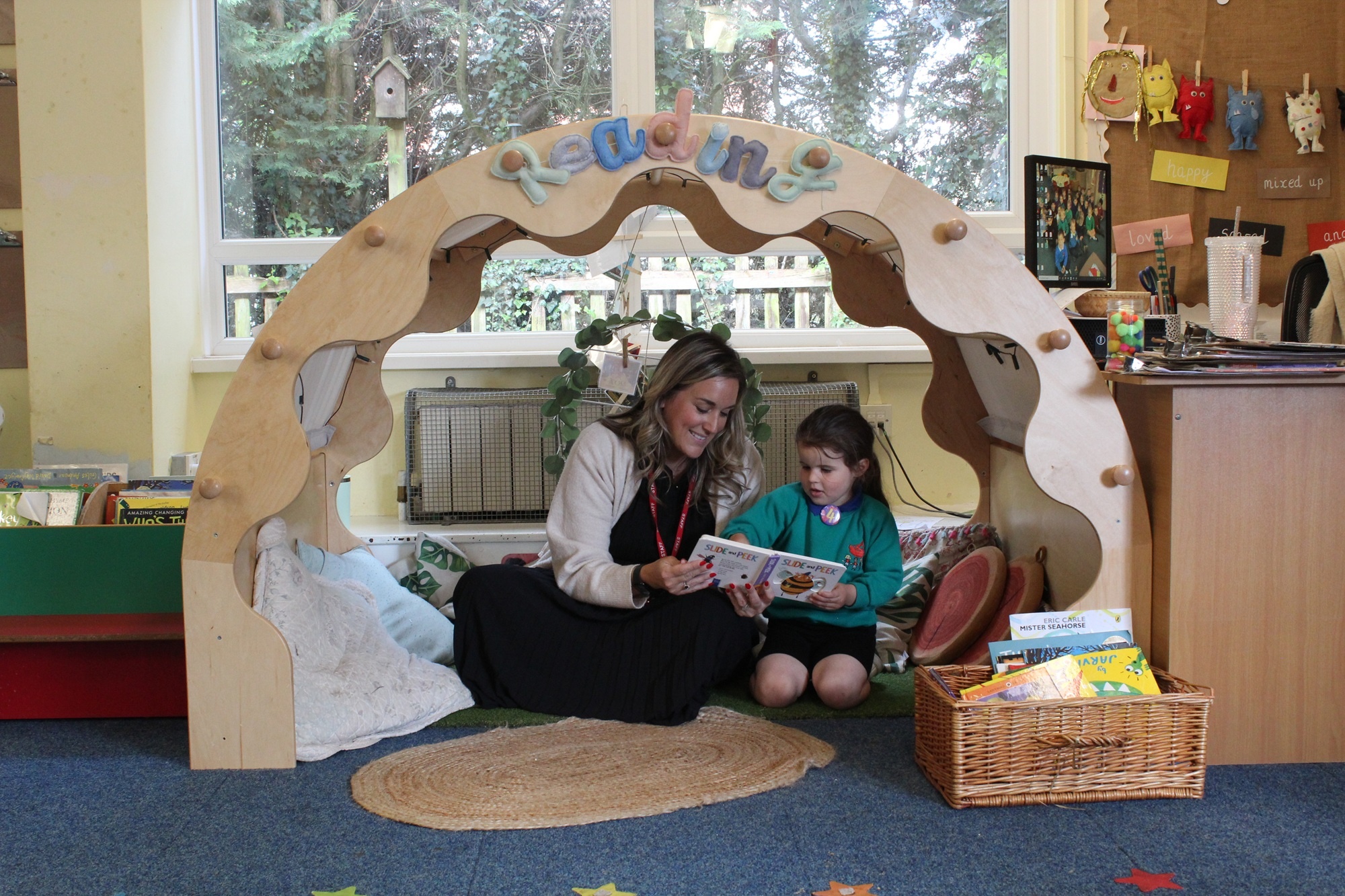
To support the development of Phonics and Reading skills, each week children in Reception and Key Stage One are assigned a decodable, Little Wandle reading book which is closely matched to their individual phonic knowledge. Children read these books in reading sessions with their teacher during the week and then bring these books home to continue to develop their decoding, fluency and prosody skills. When you do not have the physical book at home, you can access your child’s eBook Library to allow them to read their Little Wandle book to you. Please use the link below to take you to the login page for the Collins eBook Library:
https://www.collinshub.co.uk/login/
At Balsall Common we also recognise the importance and value of reading for pleasure. We read a wide variety of stories to our children and encourage them to talk about books. As a school we are lucky to have two well-stocked libraries which offer our children access to a wonderful range of fiction and non-fiction books. Each year group visits one of our libraries each week, where they can choose a book that they feel they will enjoy. This book is brought home to share.
If you would like any recommendations for books to read with your child or how to make the most of sharing stories, Pie Corbett’s Reading Spine suggests some ‘essential reads’ for children in each school year from Nursery to Year 6.
https://images.scholastic.co.uk/assets/a/c5/0e/creating-a-reading-spine-hand-out-2137908.pdf
Transitioning from Key Stage 1 to Key Stage 2 (Reading focused)
Year 3 is an important transition year, where children build on the strong foundations developed in KS1 and begin to develop greater independence, fluency and confidence as readers. At BCPS, we support this transition by providing a range of engaging reading opportunities and carefully planned teaching.
Developing Reading Fluency: At the beginning of Year 3, there is a strong focus on improving reading fluency. Children read aloud daily and benefit from teacher modelling, echo reading, partner reading and re-reading familiar texts to improve pace, accuracy and expression. Pupils are encouraged to perform poetry, participate in choral reading and even take on the role of the teacher by reading aloud to their peers. As the year progresses, the focus gradually shifts towards deeper comprehension and critical analysis of texts.
Supporting Every Reader: Children who require additional support are quickly identified through regular assessments. Phonics re-screening takes place for the lowest 20% of readers and any other pupils who may need further support. Where appropriate, children access the Little Wandle catch-up programme, alongside targeted teaching assistant support, phonics interventions and fluency assessments. Reading groups are reviewed and adjusted throughout the year to ensure children receive the support they need.
Additional Reading Opportunities: Lower-attaining pupils benefit from daily one-to-one reading sessions, while some children also take part in a weekly comprehension group once their fluency has improved. Precision teaching is used to support children with specific SEND needs.
Explicit Reading Skills Teaching: Children take part in weekly reading lessons using a range of high-quality texts and genres, including diary entries, newspaper reports and instructional texts. These sessions include explicit vocabulary instruction and the teaching of reading skills through the VIPERS approach, in line with National Curriculum expectations. The texts studied often provide inspiration and ideas for children's weekly writing.
Reading for Pleasure: Every class enjoys daily story time, helping to foster a lifelong love of reading. Class texts are carefully chosen because they link to the curriculum or are recognised as high-quality children's literature. Children regularly discuss favourite books and contribute to the school's Reading Portfolio through activities such as book reviews and character descriptions.
Library Visits: Children visit the school library each week, choosing one book to take home and another to keep in class for independent reading opportunities throughout the day.
Promoting a Love of Reading at Home: Reading-themed homework projects encourage children to engage creatively with books through activities such as designing a reading corner, creating posters for the library and writing book reviews.
Rich Reading Environments: Every classroom has an inviting book area with a wide range of texts, including books that reflect diverse cultures and experiences and support learning across the curriculum, including RE, Music and Geography. Displays within classrooms also celebrate books and the class text being studied.
Assessment and Monitoring: Teacher assessments are robust and include regular opportunities to hear children read, short written comprehension activities and fluency assessments. Progress is carefully monitored throughout the year so that any child experiencing difficulties can be identified and supported promptly.
A Broad and Exciting Reading Curriculum: All children are exposed to a diverse and engaging range of texts and reading experiences designed to motivate, inspire and develop a genuine love of reading.
Through these experiences, we ensure that all children make a successful transition into Key Stage 2 and continue their journey towards becoming confident, enthusiastic and lifelong readers.